Six problems, one tooth.
A failing root canal hiding a separated file, a calcified canal, a missed canal, internal resorption, and a crack — quiet and healed 3.4 years after retreatment.
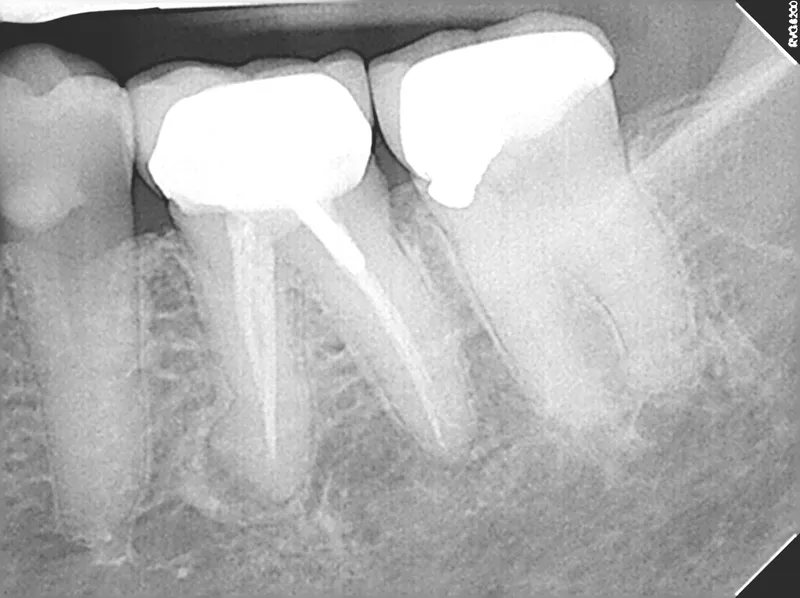
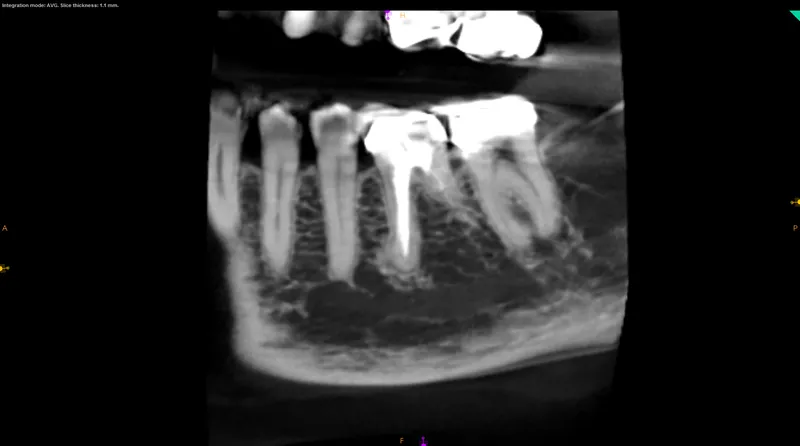
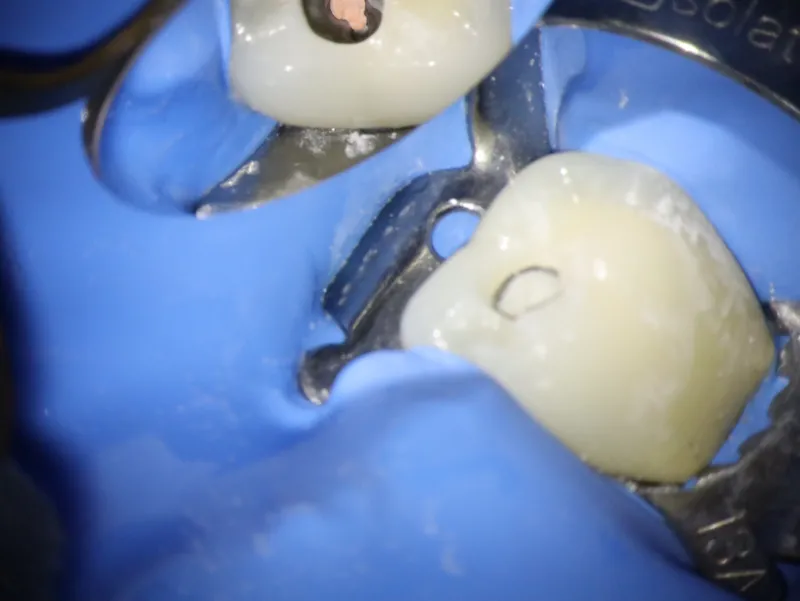
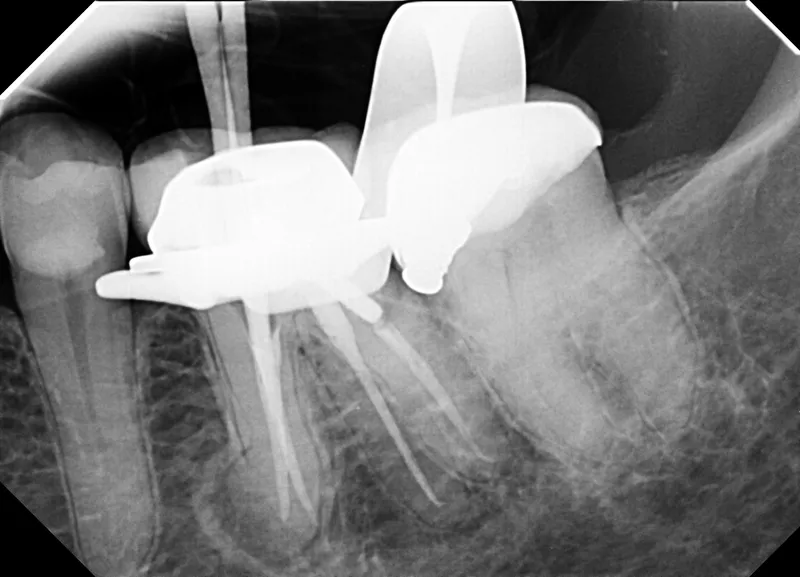
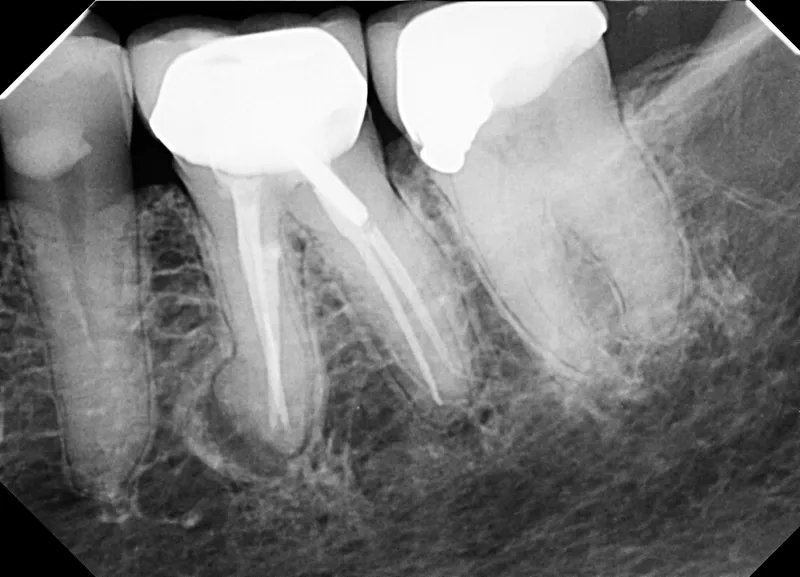
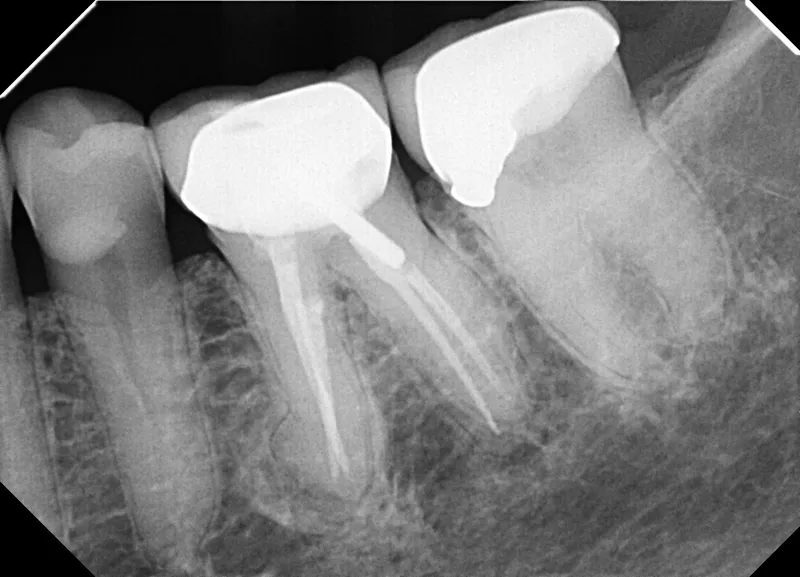
One tooth's journey, in four beats.
A root canal that wouldn't rest.
Years after the original treatment, the symptoms came back: tenderness to biting, slight mobility, and a sinus tract draining intermittently near the root. The 2D film showed the old filling and a lesion at the apex — and not much else.
The CBCT counted six.
A separated instrument from the first treatment. A calcified canal. A canal the original work never found. Internal resorption. A crack. And a post that had to come out before anything else could begin. We called it Guarded — and explained exactly why.
One problem at a time.
Post out under ultrasonic vibration, the broken file retrieved, the calcified canal negotiated slowly under the microscope, the missed canal found with the CBCT as the map, the resorption defect sealed with bioceramic. Calcium hydroxide between visits; warm vertical obturation to finish.
Quiet at 3.4 years.
Complete radiographic healing of the lesion. No symptoms, no sinus tract, the tooth in normal function under its crown — with the immediate buildup protecting the cracked structure until the crown was placed.
- ✦ CBCT before any treatment decision — all six complications mapped in advance
- ✦ Post removal with ultrasonics, breaking the cement bond without tension on the root
- ✦ Separated-instrument retrieval under the operating microscope
- ✦ Calcified canal negotiated with small files and ultrasonic tips
- ✦ Previously missed canal located and instrumented, CBCT-guided
- ✦ Internal resorption defect cleaned and sealed with bioceramic
- ✦ Calcium hydroxide medication between visits; warm vertical obturation at visit two
- ✦ Immediate bonded buildup to protect the cracked structure until the definitive crown
What this case teaches.
More from the collection.
- Out, repaired, and home again — A failing root canal locked behind a large metal post — unreachable from above, impractical from the side. So the tooth came out, was repaired in fifteen minutes, and went back in.
- Sealing the wrong turn — A drill searching for a canal went 2mm past where it should have — straight into the furcation. Three hours later the hole was sealed, and three years later the tooth is still here.
- Scheduled for extraction, still here — Another provider said the tooth had to go — a perforation, a draining sinus tract, a root canal that had failed. Five years after combined retreatment and surgical repair, it's still doing its job.
A root canal that isn't getting better?
Retreatment is our daily work. Bring the history — we'll get the full picture before anyone talks extraction.