
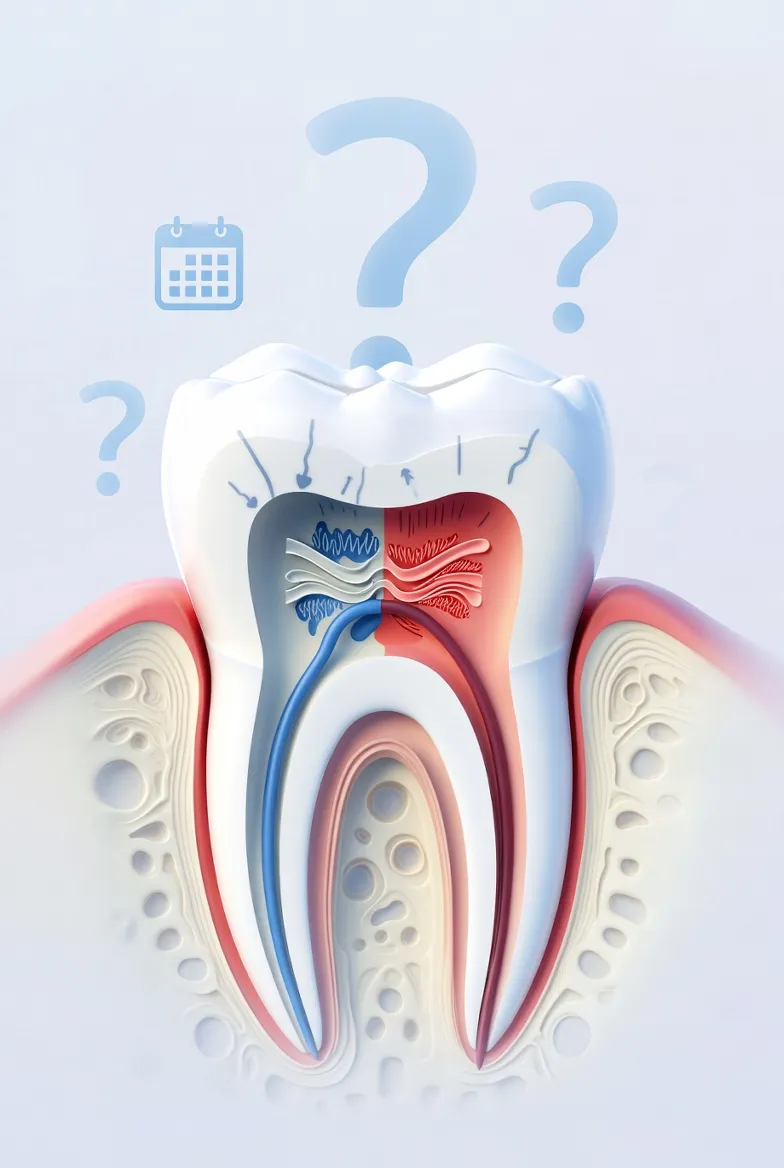
Your root canal was weeks ago — maybe even months — and something still doesn’t feel right. The tooth aches when you bite down, or there’s a dull throb that won’t go away.
You’re not imagining it, and you’re not alone.
Most root canals heal without issues. But a small percentage of patients do experience ongoing symptoms — and the causes range from completely normal healing to something that needs attention. The key is knowing the difference.
First: Your Roots Were NOT Removed
This is the most common misunderstanding we hear. Many patients assume root canal treatment removes the tooth’s roots, so the tooth should feel nothing afterward.
Myth: Root canal treatment removes the roots of the tooth, so it shouldn't feel anything afterward.
Reality: Only the pulp (nerve tissue inside the roots) is removed. The roots themselves stay exactly where they are — anchored in your jawbone and surrounded by living tissue that can still sense pressure, temperature, and inflammation.
Think of it like removing the wiring from inside a wall. The wall is still there, still connected to the foundation. Your tooth works the same way — the internal nerve is gone, but the tooth and its surrounding structures remain alive and functional.
What Normal Recovery Looks Like
Not all post-root-canal sensations mean something is wrong. Here’s the typical healing timeline:
Days 1–2: Peak Discomfort
Soreness, tenderness when biting, mild swelling. This is your body's normal inflammatory response. OTC pain medication handles it well.
Days 3–7: Steady Improvement
Each day should feel a little better. Most patients notice significant improvement by day 3.
Weeks 2–4: Wrapping Up
Lingering sensitivity fades. The tooth may feel slightly "different" but shouldn't actively hurt.
Beyond 4 Weeks: Time to Investigate
If you're still having symptoms at this point, it's worth a professional evaluation — even if the pain is mild.
About 40–60% of patients feel some discomfort in the first week. This is normal and expected. It’s the pain that persists beyond a month that warrants a closer look.
Normal Pain vs. Warning Signs
This is the question that matters most. Here’s how to tell the difference:
Likely Normal
- Mild tenderness when biting that’s gradually improving
- The tooth feels “different” but not painful
- Occasional brief sensitivity that fades quickly
- Discomfort that responds well to ibuprofen
- Symptoms that are better each week
Schedule an Evaluation
- Pain that’s getting worse, not better
- Throbbing or spontaneous pain after the first week
- Swelling that develops or returns
- Pain when pressing on the gum above the tooth
- Symptoms that started improving, then came back
Why a Tooth Can Still Hurt: The Short Version
When pain lingers beyond normal healing, the cause usually falls into one of two categories:
Tooth-related causes
- Missed canal — Some teeth have extra canals that are difficult to find without advanced imaging
- Incomplete seal — If the filling material doesn’t reach the full length of the canal, bacteria can persist
- Crack in the tooth — Hairline fractures are invisible on standard X-rays and can cause persistent symptoms
- High bite — If the crown or filling sits even slightly too high, constant pressure irritates the surrounding tissue
Causes that aren’t the tooth at all
This is where it gets interesting — and why a specialist evaluation matters.
Up to 50% of persistent post-root-canal pain cases turn out to be nonodontogenic — meaning the pain isn’t coming from the tooth. Conditions like TMJ disorders, sinus inflammation, and nerve issues can mimic dental pain convincingly enough to fool both patients and general dentists.
- TMJ/TMD: Jaw joint dysfunction can refer pain to specific teeth — one study found 42% of persistent cases were TMD-related
- Sinus inflammation: Upper back teeth sit directly beneath the sinuses, and sinus pressure can feel identical to a toothache
- Neuropathic pain: The nerve system itself can generate pain signals even after successful treatment
- Referred muscle pain: Trigger points in jaw and neck muscles can create phantom tooth pain
This is why we don’t just re-treat a tooth that hurts. We investigate why it hurts first.
Common Questions
Is it normal to have pain 2 weeks after a root canal?
Mild tenderness when biting can still be present at 2 weeks and is often normal. But if it's sharp, throbbing, or not improving at all, schedule an evaluation to make sure there's no infection or bite issue.
Can a root canal fail years later?
Yes, though it's uncommon (5–15% of cases). New cracks, reinfection from a failing crown, or previously undetected anatomy can cause problems years later. Regular dental check-ups catch these issues early when they're easiest to fix.
Why does my tooth feel "weird" but not painful?
The periodontal ligament surrounding your tooth root still senses pressure and position. After treatment, the tooth may feel slightly different when you bite — this is normal and usually fades with time. If it persists beyond a few months, mention it at your next dental visit.
What if I have throbbing pain after a root canal?
Throbbing in the first 48 hours can be a normal flare-up. Throbbing that starts or returns after the first week is more concerning — it could indicate inflammation, reinfection, or a crack. Contact your endodontist for evaluation.
Should I get a second opinion from a specialist?
If your general dentist has said "everything looks fine" but you're still in pain, a specialist evaluation is a smart next step. Endodontists have microscopes, CBCT 3D imaging, and specialized testing that can identify issues standard X-rays miss.
What a Specialist Evaluation Looks Like
At our office, a comprehensive evaluation for persistent post-root-canal pain includes:
- Detailed history: When the pain started, what makes it better or worse, and how it's changed over time
- CBCT 3D imaging: Reveals hidden canals, cracks, and bone changes that standard X-rays miss
- Bite analysis: Checks whether the restoration is creating excess pressure on the tooth
- Diagnostic testing: Isolates whether the pain is truly coming from the treated tooth or somewhere else
- Non-dental screening: Evaluates for TMD, sinus, and neuropathic causes before recommending retreatment
The goal is to find the actual cause — not just repeat the root canal and hope for the best.
Want the full clinical picture? Read our detailed guide on persistent pain after root canal treatment: causes, evidence, and diagnosis for an in-depth look at the research behind these conditions.
The Bottom Line
Some discomfort after a root canal is normal. But “normal” shouldn’t last forever, and persistent pain always deserves investigation — because about half the time, it’s not even the tooth.
If you’re in Torrance or the South Bay and something still doesn’t feel right after your root canal, we’re here to help figure out why.
Call (310) 378-8342 or book an evaluation online — we see patients for second opinions and post-treatment concerns regularly.